Turf vs Grass: Uncovering the Best Shoes, Pros, Cons, and What to Expect on a Professional Pitch
One of the biggest mistakes soccer players make is wearing the wrong shoes for the playing surface. Whether you are stepping onto a professional stadium field, a local artificial turf complex, or a community grass pitch, your footwear can completely change your performance, comfort, and even injury risk.
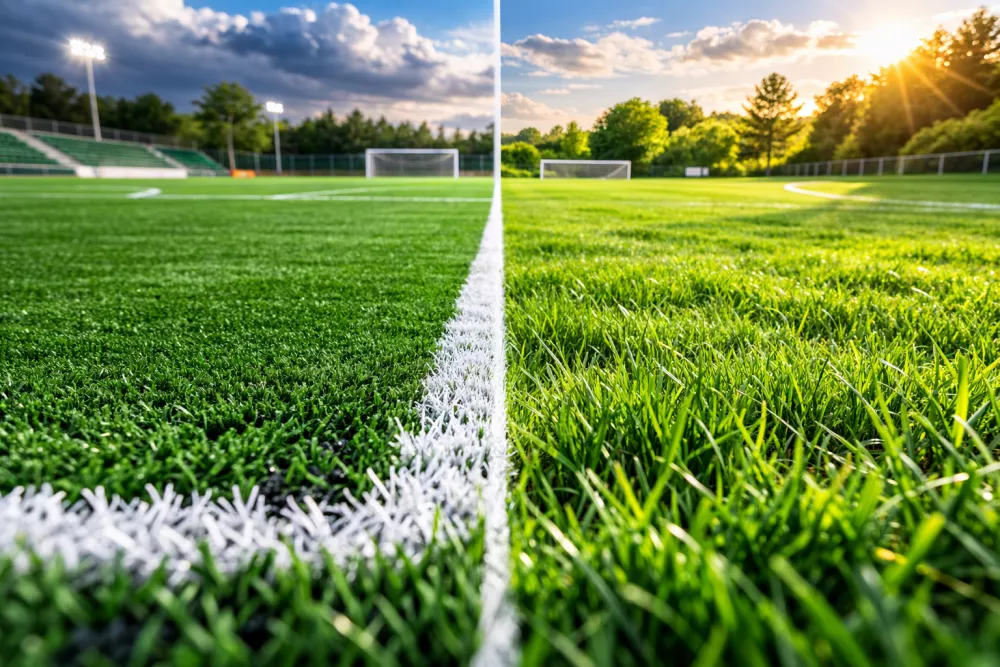
Turf and natural grass each have their own feel, speed, bounce, and playing style. Understanding the difference between them can help players choose the right cleats, improve control, and avoid painful mistakes.
What Is the Difference Between Turf and Grass?
Natural Grass Fields

Natural grass is the traditional soccer surface used in many professional stadiums around the world. Grass fields usually feel softer under your feet and provide a more natural playing experience.
However, grass conditions can change dramatically depending on weather. Rain can create muddy surfaces, while dry heat can make fields hard and uneven.
Pros of Grass Fields
- Softer impact on joints and muscles
- Natural ball movement and bounce
- Preferred by many professional players
- Better sliding and tackling feel
Cons of Grass Fields
- Can become muddy or slippery
- Requires expensive maintenance
- Field quality can vary greatly
- Weather heavily affects gameplay
Artificial Turf Fields

Artificial turf has become extremely popular, especially in the United States, because it is durable and easier to maintain. Turf fields are designed with synthetic fibers and rubber infill to imitate real grass.
Turf usually creates a faster game because the surface is more consistent and the ball moves quickly across it.
Pros of Turf Fields
- Consistent playing conditions year-round
- Less affected by weather
- Faster gameplay and ball speed
- Lower maintenance costs
Cons of Turf Fields
- Harder impact on knees and joints
- Can become extremely hot in summer
- Higher chance of turf burns
- Ball bounce can feel less natural
Why Soccer Shoes Matter
Wearing the wrong shoes on the wrong surface can lead to slipping, poor control, discomfort, and injuries. Different cleat patterns are specifically designed for different field types.
Best Shoes for Natural Grass

For natural grass, players usually wear firm ground (FG) cleats or soft ground (SG) cleats depending on field conditions.
Firm Ground (FG) Cleats
FG cleats are the most common soccer shoes and are designed for dry or slightly wet grass fields. They provide excellent traction without digging too deeply into the surface.
Soft Ground (SG) Cleats
SG cleats are used for wet, muddy conditions. These usually feature longer metal studs that improve grip on slippery grass.
Grass Shoe Tips
- Use FG cleats for most normal grass fields
- Use SG cleats only in wet or muddy conditions
- Avoid turf shoes on deep natural grass
Best Shoes for Turf

Turf fields require different shoes than natural grass. Most players use turf shoes (TF) or sometimes artificial ground (AG) cleats.
Turf Shoes (TF)
Turf shoes have many small rubber studs that spread pressure evenly across the surface. They improve comfort and reduce stress on knees and ankles.
Artificial Ground (AG) Cleats
AG cleats are specifically designed for modern artificial turf systems. They offer slightly more grip than turf shoes while reducing the risk of studs getting stuck in the surface.
Turf Shoe Tips
- Avoid metal studs on turf
- FG cleats can increase injury risk on artificial surfaces
- Turf shoes are usually more comfortable for casual players
What Professional Players Prefer
Most professional players still prefer high-quality natural grass because it feels softer and more natural. However, modern artificial turf has improved significantly over the last decade.
Some professional stadiums now use hybrid systems that combine natural grass with synthetic fibers to improve durability while maintaining a natural feel.
Injury Concerns

Players often report more knee soreness, ankle stress, and muscle fatigue after long matches on turf. Turf can also create more friction, leading to painful turf burns during slides and falls.
Grass fields usually feel softer on the body, but poor field conditions can increase slipping injuries.
Final Thoughts
There is no perfect soccer surface for everyone. Some players love the speed and consistency of turf, while others prefer the softer feel and traditional experience of natural grass.
The most important thing is choosing the right footwear for the surface you are playing on. The correct shoes improve traction, comfort, ball control, and safety — whether you are playing in a local league or stepping onto a professional pitch.
Before your next match, check the field type first. Your knees, ankles, and performance will thank you later.