
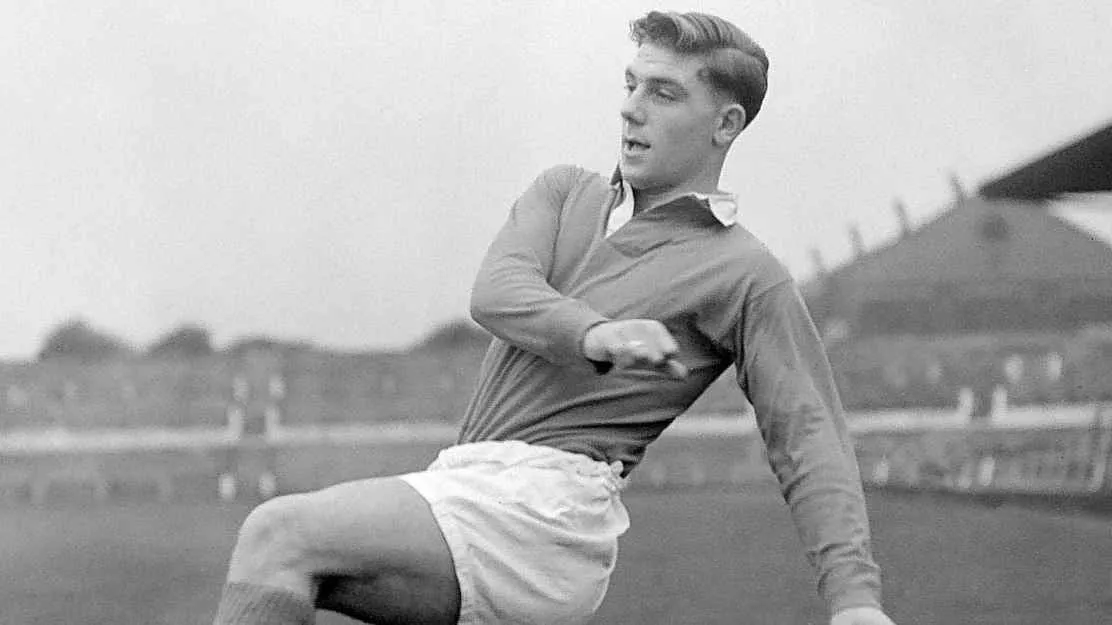
Duncan Edwards is a name that echoes through the annals of football history, yet for many modern fans, his true impact remains somewhat obscured by time. Born in 1936 in Dudley, England, Edwards was a precocious talent whose life was tragically cut short in the Munich air disaster of 1958. However, his legacy as a footballer remains indisputable.
The Prodigy of Manchester United
Edwards joined Manchester United in 1952 at the tender age of 16. Under the tutelage of the legendary manager Sir Matt Busby, he quickly became an integral part of the famous "Busby Babes." His versatility on the pitch was unmatched; whether deployed as a half-back or forward, his physical prowess and technical skill set him apart from his peers.
- Debut for Manchester United: April 4, 1953
- First-team appearances: 177
- Goals for Manchester United: 21
Edwards' robust playing style and tactical intelligence earned him a reputation as one of the most formidable players of his era. His performances in the English First Division and European competitions established him as a cornerstone of Manchester United's squad.
An Indelible Mark on English Football
Beyond club football, Edwards' contributions to the England national team were equally significant. He earned his first cap in 1955 and went on to represent his country 18 times, scoring five goals. His presence on the field was so commanding that many contemporaries believed he could have captained England to World Cup glory had he lived longer.
Former teammates and opponents alike have spoken of Edwards' extraordinary ability. Sir Bobby Charlton, a fellow Busby Babe and World Cup winner, once remarked, "Duncan Edwards was the only player that made me feel inferior." Such high praise underscores the profound respect Edwards commanded within the footballing community.
Legacy Endures
Although Duncan Edwards' career and life were tragically brief, his influence persists. His story is a poignant reminder of the potential that was lost in the Munich disaster. Today, as Manchester United and England continue to strive for greatness, the spirit of Duncan Edwards endures, inspiring new generations of players and fans alike.
In conclusion, Duncan Edwards was more than just a footballer; he was a symbol of an era and an embodiment of talent and determination. His legacy is preserved not just in the history books but in the hearts of those who cherish the beautiful game.
Read Full Article Here